Skinwalker Ranch is a hotspot of real paranormal and UFO activity
By Colin PetersonJuly 8, 2026
Where the evidence lands →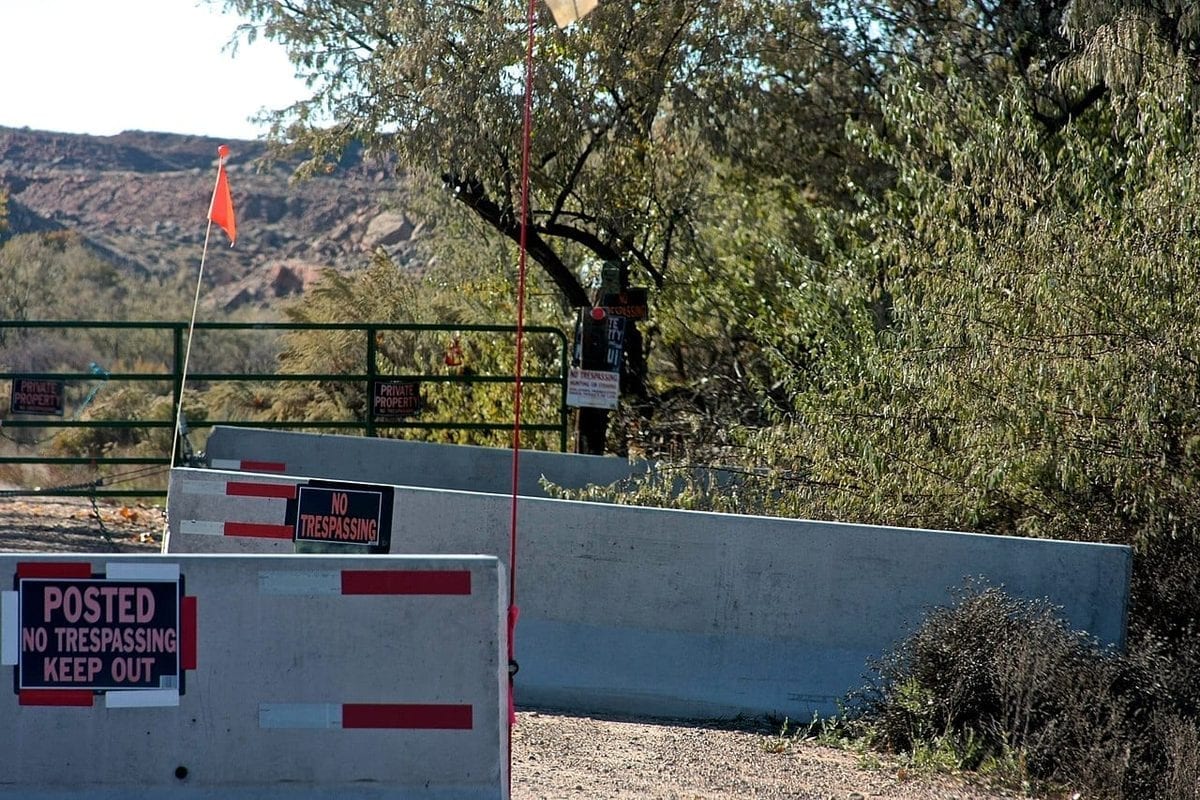
That Skinwalker Ranch in Utah's Uintah Basin sits on a site of genuine paranormal and extraterrestrial activity (UFOs, cattle mutilations, cryptid sightings and poltergeist-like disturbances) serious enough that a private research institute and, later, a classified Defense Intelligence Agency program both investigated it.
The government and private research interest is real and well documented, but decades of investigation have produced anecdote and instrumentation logs, not a single verified, reproducible piece of anomalous evidence.
Believed by: ~41% think some UFOs are alien craft
The full story
A ranch with a reputation
Skinwalker Ranch is a real place: roughly 512 acres of high desert pasture in Utah's Uintah Basin, southeast of the small town of Ballard, bordering the Uintah and Ouray Indian Reservation. For most of the twentieth century it was unremarkable cattle country. That changed in the mid-1990s, when Terry and Gwen Sherman leased and then purchased the property and began reporting a run of events they found impossible to explain: cattle found dead with clean, precise wounds, livestock that vanished outright, lights that moved against the sky in ways aircraft should not, and, they said, large animals that shrugged off rifle fire.
The Shermans went public with a local rancher-and-oddity story that might have stayed regional had it not reached Robert Bigelow, an aerospace and real-estate entrepreneur who had already founded a private organization, the National Institute for Discovery Science (NIDS), to fund research into unexplained phenomena. In 1996 Bigelow bought the ranch for about $200,000 specifically to study it, and NIDS staff, led by biochemist Colm Kelleher, spent years logging incidents, installing cameras and sensors, and trying to capture something repeatable.
Taken seriously by people with the least reason to bluff
Give the case for Skinwalker Ranch its full weight, because the institutional record here is unusually strong for a paranormal claim. This is not a story that lives only in self-published books and late-night radio. A private research institute funded years of on-site investigation. A U.S. defense agency later put public money into related research that touched the same property. That is a pattern of sustained, resourced curiosity from people who had every professional incentive not to be fooled.
Robert Bigelow, the billionaire who bought the ranch outright to have somewhere to point that curiosity, was not some rich eccentric indulging a hobby. His company, Bigelow Aerospace, held a genuine $17.8 million NASA contract to build the Bigelow Expandable Activity Module (BEAM), an inflatable habitat that launched to the International Space Station in April 2016 and remains attached to it, still in active use, today. A man whose aerospace engineering NASA itself paid to fly in orbit was, at the very same time, convinced enough by what the Shermans reported to buy their ranch and bankroll a dedicated institute to study it.
The paper trail on the government interest is genuine and traceable to primary documents, not rumor. The Defense Intelligence Agency's Advanced Aerospace Weapon System Applications Program (AAWSAP) ran from 2007 to 2012, was budgeted at roughly $22 million, and was executed under contract by Bigelow Aerospace Advanced Space Studies (BAASS), the same Bigelow who owned the ranch. The DIA itself confirmed the program's existence to the press in 2017 and, in January 2019, released under FOIA a list of the 38 research studies it funded. James Lacatski, the DIA official who championed the program, later co-wrote a book describing how briefings on the ranch's reported activity helped persuade Senator Harry Reid (joined by Senators Ted Stevens and Daniel Inouye) to direct funding toward aerospace-threat research broadly understood to include unidentified aerial phenomena.
The witnesses, for their part, were not anonymous internet posters. Kelleher held a PhD in biochemistry and spent hundreds of nights on the property; his co-author George Knapp was a working investigative journalist, the only outside press allowed to observe the NIDS team's fieldwork. Their 2005 book, Hunt for the Skinwalker, is careful to present the team's own uncertainty rather than a triumphant conclusion, which, to believers, makes its stranger claims more credible, not less. If sober scientists and a defense intelligence official all thought this ranch was worth years of attention, the argument goes, dismissing it outright requires dismissing their judgment too.
Brandon Fugal, the Utah real-estate investor and chairman of Colliers International's Utah office who bought the property in 2016 and went public as its owner in 2020, has described coming to the ranch as a “healthy skeptic, fully expecting that there was a 95 percent chance that all of the reports of high strangeness and supernatural activity had a natural, prosaic explanation.” He built his team around credentialed researchers rather than enthusiasts: principal investigator Erik Bard, a plasma and X-ray physicist with a physics degree from Brigham Young University and roughly a dozen patents in X-ray instrumentation, and aerospace engineer Dr. Travis S. Taylor, who holds a PhD in optical science and engineering and a second PhD in aerospace engineering alongside a career of advanced-technology work for the Department of Defense and NASA. In 2025 the team went further, launching its own satellite, RanchSat-1, to extend sensor coverage into low Earth orbit. Whatever else is true, this has never been a story frozen in the 1990s: credentialed scientists with real instruments, and a real research budget, are still actively trying to put the ranch's reports on the record today.
Attention is not evidence
The problem for the paranormal claim is not that no one looked. It is that everyone who looked, looked hard, for years, with real instruments and real budgets, and came back with logs, not proof.
Start with what AAWSAP actually was. Its congressional funding was directed at broad aerospace-threat and advanced-technology research: the DIA's released list of funded studies covers subjects like high-energy lasers, propulsion concepts and exotic materials science, the kind of speculative defense research programs routinely commission. Pentagon spokespeople who confirmed the program's existence described its scope as investigating unidentified aerial phenomena generally; they have not confirmed that anything recovered or recorded at Skinwalker Ranch specifically constitutes verified evidence of extraterrestrial or paranormal activity. Funding a study is evidence of institutional interest. It is not evidence that the thing being studied is real.
Two research teams, a Pentagon program and a cable network have all pointed instruments at this property. None has produced a sample, a recording or a data set that has survived independent scrutiny.
The NIDS investigation itself is candid about this gap. Kelleher and Knapp's own book repeatedly describes equipment failures at the moments phenomena were reportedly occurring, secondhand and reconstructed accounts, and an absence of the kind of clean, repeatable data that would let outside scientists evaluate the claims. Skeptical researchers, including science writer Robert Sheaffer, have gone further, noting that the property's prior owners of some sixty years reported nothing unusual, and arguing that the most parsimonious reading is a family account (embellished or sincerely mistaken) that found a uniquely well-funded audience.
The cattle mutilations fit a pattern documented well beyond this one ranch. Reports of precisely wounded livestock became a fixture of American ranching lore starting in the 1970s, prompting a federally funded investigation completed in 1980 by former FBI agent Kenneth Rommel. Its conclusion, echoed by state veterinary examiners in multiple later cases, was that the overwhelming majority of “mutilations” were ordinary predation and scavenging: bloating, insect activity and carnivore feeding can strip an animal's soft tissue in ways that look surgically precise to an untrained eye, even though no scalpel was involved. That does not prove every individual case at the ranch had a mundane explanation (some accounts remain simply unresolved), but it removes mutilation reports as freestanding proof of anything exotic.
The lights, disappearances and physical effects reported at the ranch are harder to audit precisely because so little of the underlying data has been made public or subjected to peer review. A remote property at night, with few external light sources, unfamiliar terrain, and, by every account, a team primed to expect the extraordinary, is also a setting well suited to ordinary aircraft lights, atmospheric effects, nocturnal wildlife and simple misperception. Kelleher and Knapp do not claim to have ruled these out so much as to have been unable to fully explain every individual incident, which is a meaningfully weaker claim than proof of the paranormal.
A landscape that was already listening for something
Skinwalker Ranch draws its power from a genuinely unusual convergence: real institutional money, a real remote landscape, and a pre-existing cultural narrative about danger in that exact region, arriving together. Strip away any one of the three and the story is far less compelling. Together, they make an ordinary rural mystery feel load-bearing.
The property's name comes from yee naaldlooshii, a figure in Navajo (Diné) tradition often rendered in English as “skinwalker”, understood within that tradition as a malevolent witch capable of taking animal form: the deliberate inverse of a healer. It is a real and, within Navajo communities, seriously held belief, not a piece of horror-movie set dressing invented for tourists. Navajo commentators and Indigenous studies scholars have specifically pushed back on outside retellings that flatten the belief into generic spooky flavor text, noting that the lore is traditionally not discussed with outsiders at all and carries meaning the ranch's popular branding does not reflect. That context deserves to be stated plainly rather than mined for atmosphere: the ranch borrowed a name from a living belief system it is not part of.
On top of that sits the ordinary psychology of an isolated, high-stakes environment. Researchers sent to a remote property specifically because it is reputed to be haunted are not neutral observers; expectation shapes perception, and a night spent watching for the uncanny in unfamiliar terrain will produce more reported anomalies than the same night spent doing routine ranch work. Sustained, repeated reporting over years (rather than one dramatic sighting) can also read as more credible to observers, even though persistence of a claim is not the same as evidence for it.
Finally, there is a straightforward commercial engine. Hunt for the Skinwalker became a bestseller; Skinwalkers at the Pentagon followed it; the History Channel's The Secret of Skinwalker Ranch has run for multiple seasons. All of that content is more valuable, to everyone involved, if the mystery stays open. None of this means the participants are insincere; Kelleher, Knapp and Lacatski all present themselves, credibly, as people who went looking for real answers. It does mean the incentives on every side favor an unresolved case over a closed one.
Years of looking, nothing verified
Unusually serious people and institutions (a credentialed research team, an investigative journalist, and a real Defense Intelligence Agency program) spent years and real money looking, and none of them has produced a sample, recording, or data set that has been independently verified to demonstrate anything paranormal or extraterrestrial. Absence of a mundane explanation for every single reported incident is not the same as presence of an exotic one.
At the same time, this is not a case that can be waved away as pure hoax or mass delusion the way some paranormal hotspots can. The AAWSAP funding is a matter of public FOIA record, not legend, and the ranch's researchers have generally been transparent about their own uncertainty rather than claiming proof. What can be said with confidence is narrower than either the believers or the most dismissive skeptics claim: something drew sustained, well-resourced attention to a working cattle ranch in the Utah desert for three decades, and after all of it, the phenomena remain exactly where they started: reported, taken seriously by credible people, and unconfirmed.
What's still unexplained
- The DIA's FOIA-released list covers 38 AAWSAP-funded studies on broad aerospace and propulsion themes, not ranch-specific findings, and the agency has never published a declassified assessment of what its analysts concluded about Skinwalker Ranch itself. What's public comes almost entirely from a memoir by the program's own former insiders (Lacatski, Kelleher and Knapp), so what actually persuaded Senators Reid, Stevens and Inouye to direct funding its way has never been independently verified.
- Close to three decades of escalating, dedicated instrumentation (NIDS's 1990s camera and sensor logs, AAWSAP-era fieldwork in the 2000s, and a permanent 24/7 surveillance network and orbital satellite under the ranch's current ownership) have yet to produce a single photograph, recording, or physical sample that has been authenticated by scientists outside the property's own research teams or published in a peer-reviewed journal.
- The History Channel series has run for seven seasons showing on-camera moments its cast frames as anomalies, but none of the raw sensor, radar, or satellite data behind those moments has been released for outside review, leaving no way for independent scientists to judge whether a given on-screen event is an equipment artifact, a natural phenomenon, or something genuinely unexplained.
- Even the ranch's own most sympathetic investigators have never closed this gap: NIDS's book repeatedly describes promising equipment failing at the exact moments phenomena were reportedly occurring, and neither the original researchers nor their successors have explained why a property under near-continuous surveillance for decades keeps producing accounts rather than data.
Point by point
The claim: A real Pentagon intelligence agency paid to investigate the ranch.
What the record shows: True, and it is the strongest fact in the whole case. The DIA's AAWSAP contract, funded at roughly $22 million from 2007–2012 and run through Bigelow's BAASS, is confirmed by the agency's own 2019 FOIA release and Pentagon spokespeople. But the program's mandate was broad aerospace-threat and UAP research; the ranch was one field site among many, and the funding is documented evidence of institutional curiosity, not of anomalous phenomena.
The claim: Decades of witnesses, including trained researchers, report seeing genuinely inexplicable things.
What the record shows: The witness record is real and largely sincere. NIDS staff, the Sherman family, and later BAASS and TV-series personnel all logged strange lights, disappearing cattle and equipment malfunctions. But sincerity is not the same as verification: no sample, photograph, video or sensor log from the ranch has ever been independently authenticated as showing something outside known phenomena, and skeptical investigators note the isolated, low-light, high-expectation setting is exactly the kind that produces honest misperception.
The claim: Cattle were mutilated in ways ordinary predators could not explain.
What the record shows: Cattle mutilation reports at the ranch echo a wider pattern the FBI and independent veterinary investigators examined nationally starting in the 1970s. Official findings, including a federally funded 1980 investigation, attributed the overwhelming majority of cases to natural predation, scavenging and decomposition, which can produce clean-looking wounds that appear surgical to a lay observer, while acknowledging a residue of individually ambiguous cases.
Timeline
- 1994–1996Terry and Gwen Sherman lease and then buy the ranch and report two years of escalating strange events: vanishing and mutilated cattle, unidentified lights, and animals that seemed unaffected by gunfire.
- 1996Aerospace entrepreneur Robert Bigelow buys the property for roughly $200,000 after hearing the Shermans' accounts, and forms the National Institute for Discovery Science (NIDS) to study it.
- 2005NIDS researcher Colm Kelleher and investigative journalist George Knapp publish Hunt for the Skinwalker, the first detailed public account of the ranch's reported phenomena and the institute's investigation.
- 2007–2012The Defense Intelligence Agency funds the Advanced Aerospace Weapon System Applications Program (AAWSAP), run under contract by Bigelow's BAASS, which conducts some of its fieldwork at the ranch alongside broader UAP research.
- 2016–2020Bigelow sells the ranch to Adamantium Real Estate, whose owner Brandon Fugal goes public with the purchase in 2020 and later launches the History Channel series The Secret of Skinwalker Ranch.
- 2021Former DIA official James Lacatski co-authors Skinwalkers at the Pentagon, an insider account describing how the ranch's reports helped motivate the creation of AAWSAP.
From the case file
The actual records: declassified, released, or leaked. We link straight to each document in its official archive, so you never have to take our word for it. Read the originals yourself.
Other case files that cite the same sources
The government and private research interest is real and well documented, but decades of investigation have produced anecdote and instrumentation logs, not a single verified, reproducible piece of anomalous evidence.
Reviewed by Colin Peterson · Last reviewed July 9, 2026 · How we rate
Common questions
Is Skinwalker Ranch true?
The government and private research interest is real and well documented, but decades of investigation have produced anecdote and instrumentation logs, not a single verified, reproducible piece of anomalous evidence.
What is Skinwalker Ranch?
A 512-acre Utah cattle ranch where a family reported years of bizarre phenomena, bought by an aerospace billionaire who built a private institute to study it, and later quietly funded through a real Pentagon program: a case with unusually serious institutional attention and, so far, no proof of anything paranormal.
What does the evidence show?
True, and it is the strongest fact in the whole case. The DIA's AAWSAP contract, funded at roughly $22 million from 2007–2012 and run through Bigelow's BAASS, is confirmed by the agency's own 2019 FOIA release and Pentagon spokespeople. But the program's mandate was broad aerospace-threat and UAP research; the ranch was one field site am…
Why do people believe it?
The government and a wealthy aerospace entrepreneur genuinely spent years and millions of real dollars investigating this specific property, which lends the claims an institutional weight most paranormal hotspots never receive.
What is still unresolved?
The DIA's FOIA-released list covers 38 AAWSAP-funded studies on broad aerospace and propulsion themes, not ranch-specific findings, and the agency has never published a declassified assessment of what its analysts concluded about Skinwalker Ranch itself. What's public comes almost entirely from a memoir by the program's own former inside…
Sources
- 1.More Light on Black Program to Track UFOs (DIA FOIA release of 38 AAWSAP research study titles), Federation of American Scientists / Defense Intelligence Agency (2019)
- 2.Animal Mutilation FOIA files (FBI-funded 1979–1980 cattle mutilation investigation), Federal Bureau of Investigation, The Vault (1980)
- 3.Hunt for the Skinwalker: Science Confronts the Unexplained at a Remote Ranch in Utah, Colm A. Kelleher & George Knapp (Paraview Pocket Books) (2005)
- 4.Skinwalkers at the Pentagon: An Insiders' Account of the Secret Government UFO Program, James T. Lacatski, Colm A. Kelleher & George Knapp (2021)
- 5.How the Pentagon Started Taking U.F.O.s Seriously, Gideon Lewis-Kraus, The New Yorker (2021)
- 6.Do Americans Believe in UFOs?, Gallup (2021)
- 7.Bigelow Expandable Activity Module (BEAM), NASA
- 8.Why a millionaire real estate mogul bought Skinwalker Ranch, Utah Business (2020)
- 9.Skinwalker, Utah, and the Search for Other Life, Mountain & Main Magazine (2026)
Embed this case file on your site
Paste this snippet to show this case file as a small card, with a link back to the full write-up. Free to use.
<iframe src="https://theconspiratory.com/embed/skinwalker-ranch" title="The Conspiratory verdict" width="520" height="190" style="border:0;max-width:100%" loading="lazy"></iframe>Help us investigate
This is a living case file. If you spot an error or know evidence we missed, tell us, and weigh in on where you land.
Where do you land?
Cast your read on this one.
Comments
Add your take. Comments are read and approved by a human before they appear, so keep it on topic and civil. Please do not accuse named, living people of crimes.